




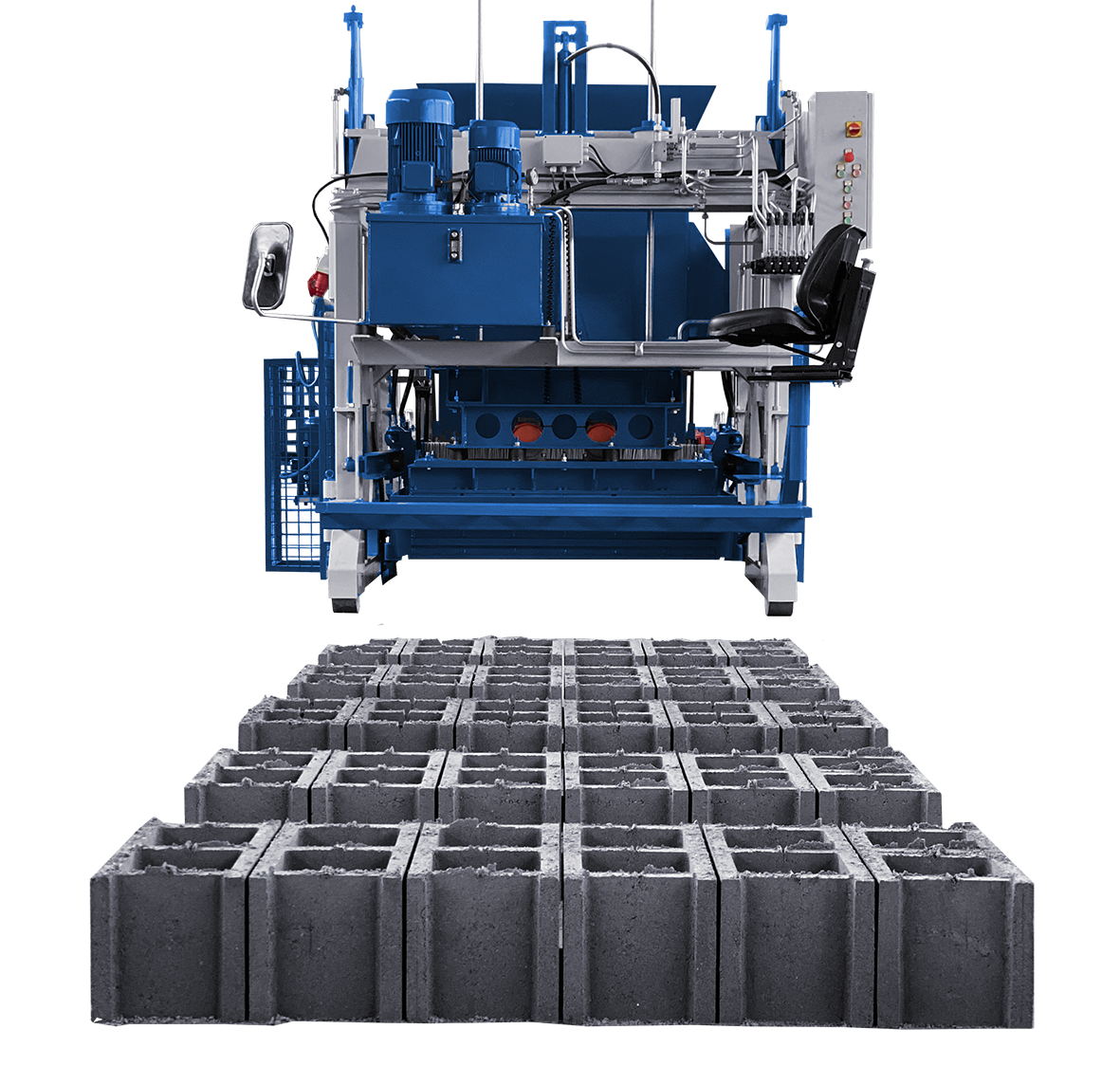
Modern concrete block machines offer higher efficiency, precision, and reliability than old-generation equipment. Learn how new technology transforms production quality and reduces costs.
The concrete industry has evolved dramatically over the last few decades, and the difference between old production equipment and today’s modern concrete block machines is greater than ever. While older machines often relied on manual work, limited automation, and basic mechanical systems, modern solutions are engineered for precision, performance, and durability.
Manufacturers around the world are now upgrading their equipment to stay competitive — and the reasons are clear.
Higher Productivity and Faster Production Cycles
One of the biggest advantages modern concrete block machines offer is significantly higher output.
With improved vibration systems, optimized molding cycles, and advanced hydraulic control, modern machines:
- produce more blocks per hour
- maintain consistent cycle times
- reduce manual intervention
- minimize downtime
Compared to older machines, which often struggled with inconsistent performance, modern technology ensures stable, predictable production capacity.
Superior Product Quality and Precision
Modern machines use advanced vibration systems, CNC – engineered molds, and precise hydraulic controls, resulting in:
- perfectly shaped concrete blocks
- high density and uniformity
- minimal dimensional deviation
- smoother surfaces and consistent strength
Older technologies often produced blocks with visible imperfections, cracks, or uneven density.
Modern concrete block machines guarantee consistent quality that meets today’s construction standards.
Lower Maintenance Costs and Longer Machine Lifespan
Old machines typically require:
- frequent mechanical adjustments
- replacement of worn parts
- regular manual lubrication
- continuous operator supervision
Modern systems, however, are built with:
- CNC – machined components
- stronger structural design
- automated lubrication
- protected hydraulic systems
- improved wear-resistant materials
This drastically reduces maintenance costs and prolongs the lifespan of the machine—an important benefit for any production plant aiming for long-term stability.
Energy Efficiency and Reduced Operating Costs
Energy consumption plays a major role in production expenses.
Modern machines use:
- optimized vibration motors
- efficient hydraulic systems
- smart power distribution
- energy-saving modes
This allows manufacturers to lower electricity consumption without sacrificing performance.
Older technology, by contrast, is known for high power usage and inefficient systems that add unnecessary costs.
Advanced Automation and Less Manual Labor
Automation is one of the defining features of new-generation concrete block machines.
Modern systems offer:
- touch-screen control panels
- automated material feeding
- automatic pallet movement
- advanced mixing and dosing
- integration with complete production lines
Less manual work means:
- fewer errors
- safer operation
- lower labor costs
- smoother production flow
This is a major advantage compared to old machines which often required multiple operators.
Compatibility With Complete Production Lines
Today’s manufacturers expect systems that integrate seamlessly.
Modern concrete block machines can be paired with:
- automatic batching and mixing systems
- curing racks and elevators
- robotic palletizing systems
- packaging units
- moisture and quality control sensors
Older machines were standalone devices with limited expandability.
Modern solutions allow production lines to grow as business needs evolve.
Better After-Sales Support and Global Availability of Spare Parts
Manufacturers of modern concrete block machines typically offer:
- fast service response
- remote diagnostics
- global spare parts supply
- technical support teams
This ensures minimal downtime and long-term operational reliability.
Older machines often suffer from outdated components, unavailable spare parts, and a lack of modern service support — leading to delays and higher costs.
Conclusion
Upgrading from old technology to modern concrete block machines brings substantial benefits: higher production capacity, consistent product quality, reduced maintenance, and complete automation. These improvements not only increase profitability but also ensure that manufacturers remain competitive in a rapidly evolving market.
Modern technology isn’t just an upgrade — it’s an investment into the future of your concrete production.